
Metrology is evolving to meet the demands of industry
For a long time, metrology consisted mainly of verifying that a part’s dimensions matched the specifications in the drawing. While this approach remains essential, it no longer, on its own, meets the requirements of the most heavily regulated industries.
Advances in measurement technologies, sensors, optical systems, and software now make it possible to monitor increasingly precise characteristics with greater repeatability and reproducibility. At the same time, manufacturers’ expectations have changed. They no longer seek merely compliant parts, but rather processes capable of consistently demonstrating their reliability, stability, and ability to produce components that systematically meet the device’s functional requirements.
Metrology thus becomes a powerful tool for process control, supporting quality, industrialization, and regulatory compliance.
From Dimensional Compliance to Functional Validation
In the medical device industry, tolerance is not limited to dimensions; it directly affects product performance. Even a slight variation can disrupt a mechanism, alter the interaction between components, or compromise a critical function.
Industrialization is therefore not merely about producing parts that meet specifications. It ensures that each component performs its function consistently and reliably.
This approach leads us to think in terms of functions rather than mere geometry. At Azurea, we incorporate manufacturing, quality control, and repeatability requirements from the very earliest stages of the project to ensure the critical functions of the device.
We specialize in:
- sealing functions
- cutting functions
- drive and coupling functions
- fastening and assembly functions
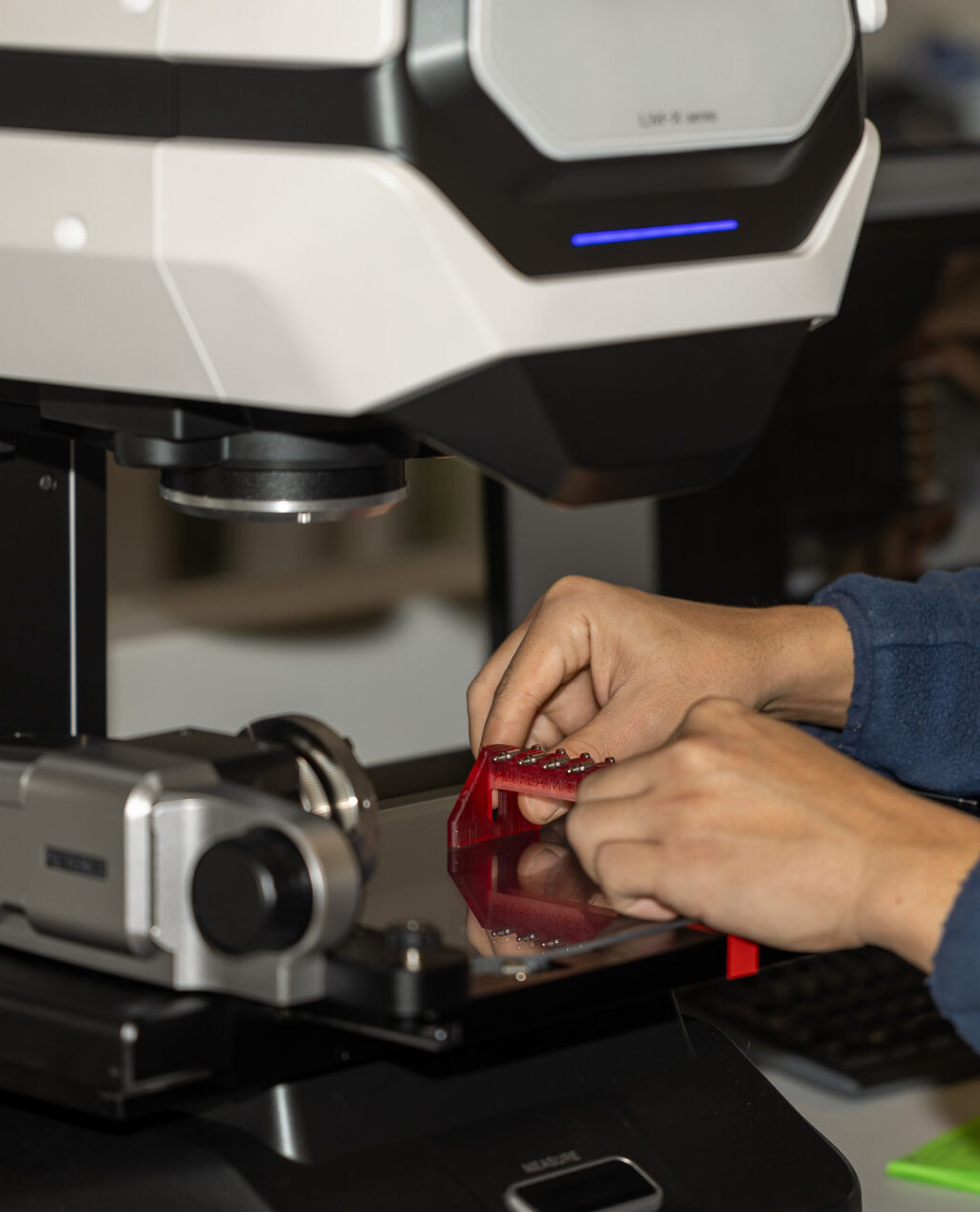
Measurement is no longer just a monitoring tool; it has become a powerful means of controlling processes and ensuring consistent performance.
Incorporate the measurement strategy from the design phase onward
Functional metrology is incorporated from the earliest stages of device development, well before the first parts are manufactured.
At Azurea, the teams identify the critical characteristics to be controlled early on, define appropriate measurement methods, and specify the functions to be demonstrated during the qualification phases. This proactive approach allows them to integrate control requirements directly into the product design and ensure the success of the industrialization stages.
This approach is fully in line with the philosophy of From Design to Manufacturing, where every technical decision is guided by the constraints of production, testing, and validation.
Validate processes to ensure production safety
Before mass production begins, the measurement methods themselves must be qualified. The teams ensure that the equipment used is repeatable, reproducible, and sufficiently accurate to guarantee the reliability of the results obtained.
This certification is maintained throughout the product’s lifespan through regular calibration, verification, and metrological maintenance. Each device is subject to rigorous monitoring to ensure the accuracy of the measurements taken and their full traceability.
In an ISO 13485-certified environment, this control is an essential component of the quality system and plays a direct role in ensuring the safety of medical devices.
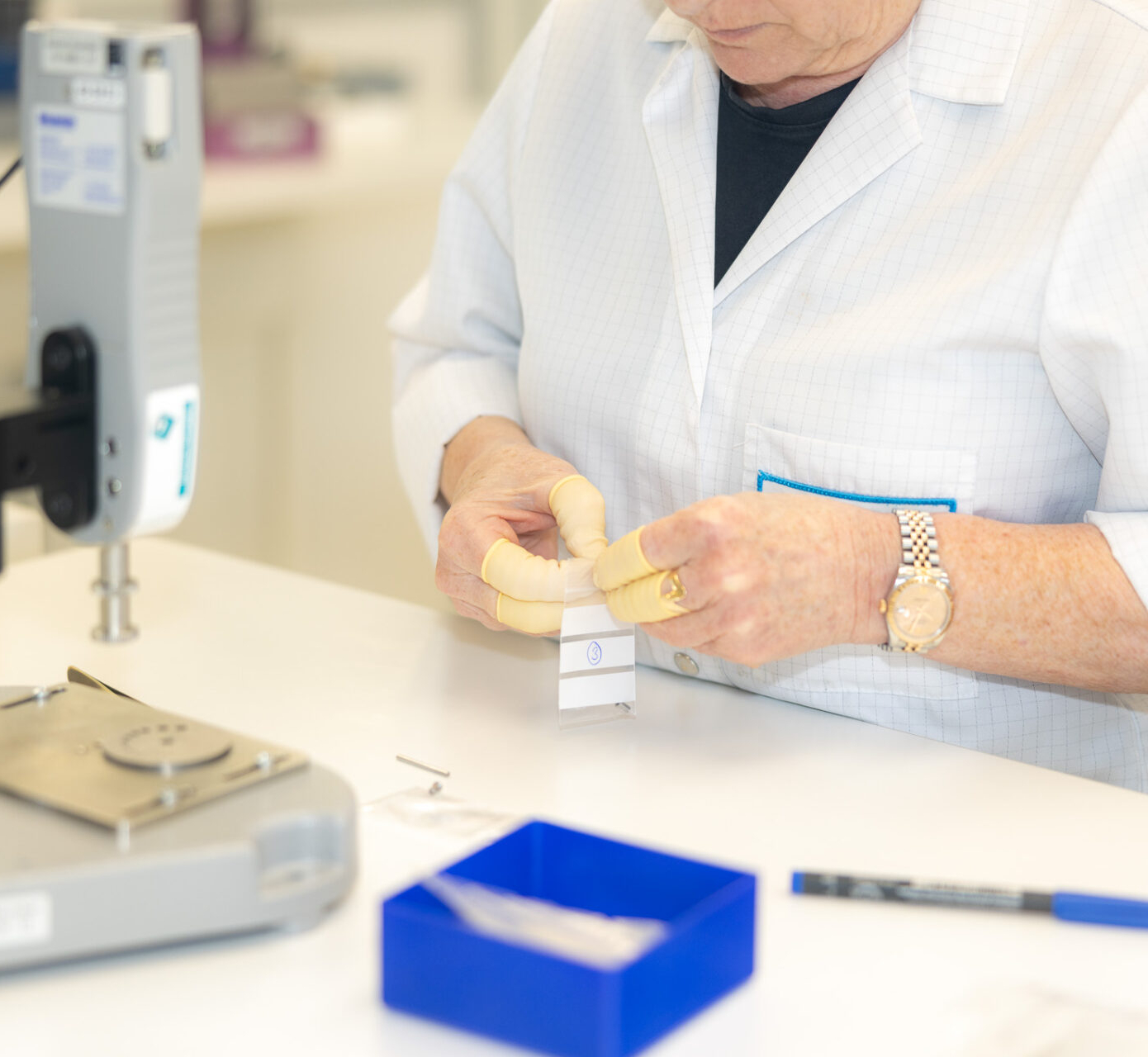
Functional metrology: Providing support that goes beyond inspection
The value of a metrology approach lies not only in the equipment used. It also depends on the ability to define a control strategy that is consistent with the product and customer requirements.
At Azurea, this support begins in the early stages of the project to ensure that measurement methods, qualification protocols, and acceptance criteria are aligned. The validation phases, such as the First Article Inspection (FAI) or the Production Part Approval Process (PPAP), which then allow us to confirm that all of the methods developed fully meet the client’s expectations.
This collaborative approach reduces discrepancies in interpretation, ensures the reliability of validations, and helps accelerate the commercialization of new devices.
Metrology in the Service of Industrial Innovation
As medical devices become more complex, metrology is evolving as well. Advances in sensors, optical systems, analysis software, and artificial intelligence are making it possible to continually improve the accuracy of measurements and their interpretation. Metrology is thus establishing itself as a valuable decision-making tool, supporting the design, qualification, and industrialization of medical devices.
Azurea: Metrology for Medical Device Performance
Ensuring a component’s compliance is no longer enough. Today, manufacturers must demonstrate that their devices consistently meet the functional, regulatory, and industry requirements of their application.